
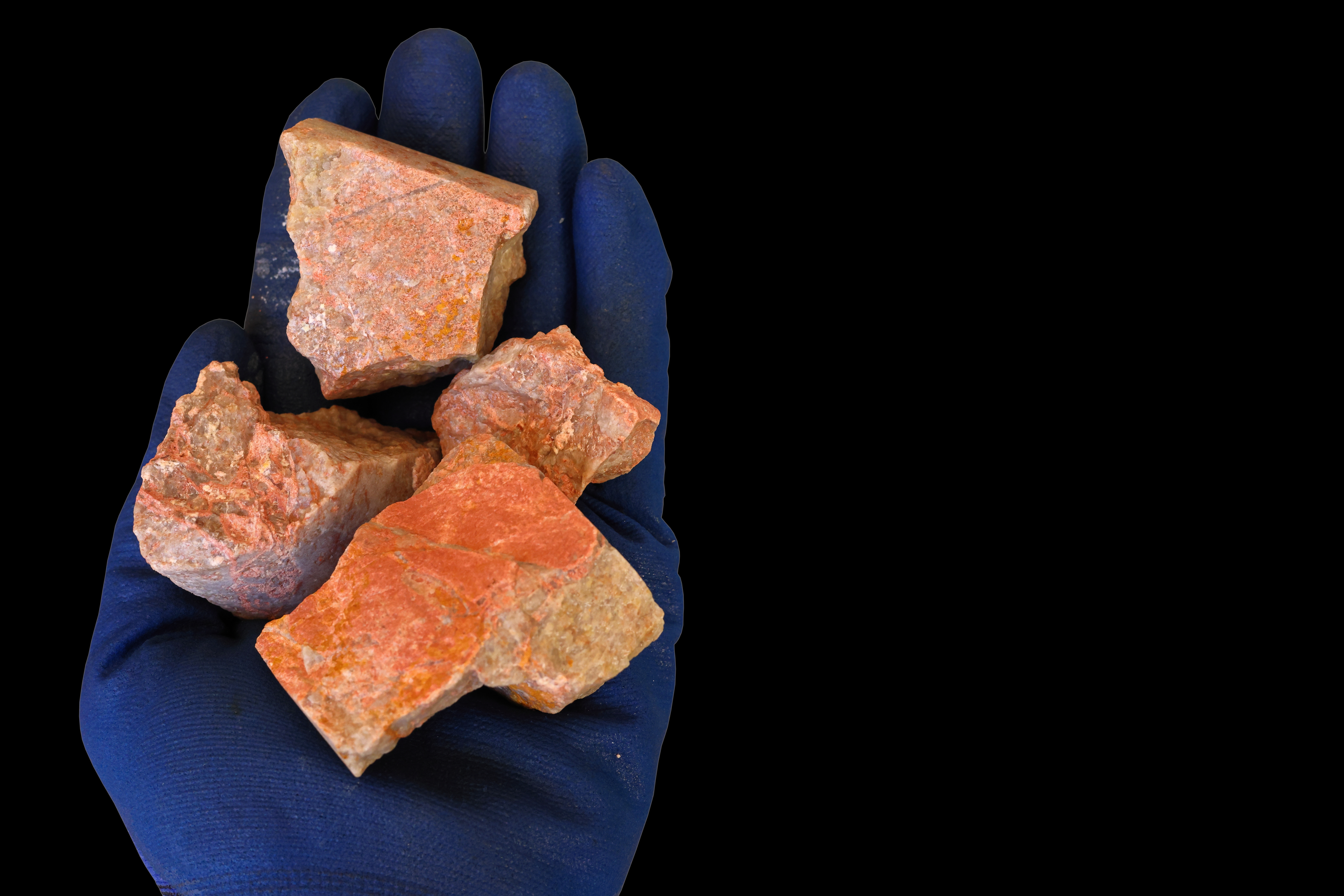
Researchers in China have developed a method to recycle rare earth magnet waste into high-performance materials. They cite over 90% material recovery.
The team, led by Pengwei Li, Qingmei Lu and Ming Yue at Beijing University of Technology, focuses on neodymium-iron-boron (NdFeB) magnets. These are widely used in electric vehicles, wind turbines and defence systems.
Turning waste into high-value magnets
The study targets machining sludge, which accounts for around 35% of magnet production waste. The sludge contains valuable rare earth elements but is difficult to recycle efficiently.
Traditionally, recyclers rely on hydrometallurgical or pyrometallurgical processes. However, these methods are energy intensive and environmentally demanding.
Instead, the researchers develop a direct regeneration route. They combine purification, oxygen reduction and controlled sintering to rebuild the material’s internal structure.
The researchers explain the new process uses ‘active grain boundary reconstruction’. This approach restores the microscopic interfaces that determine magnetic performance.
Near-virgin performance
The results are promising. Their magnets contain around 95% secondary material and achieve 95.9% remanence recovery and 99.6% coercivity recovery.
In addition, energy density reaches 91.9% of the original level. Temperature stability shows a slight improvement.
As a result, the regenerated magnets approach commercial-grade performance. This could open new pathways for circular use of rare earth materials.
Future impact unsure
However, the research is still at an early stage. Industrial scalability is unproven and economic viability compared to primary production is unclear. Feedstock variability could further affect consistency at scale.
Researchers also remark that the new solution depends on heavy rare earth inputs such as terbium.
It is hoped that industry collaboration can help overcome these obstacles. So far, Beijing University has teamed up with
- Hefei Iron & Steel Research Rare Earth Permanent Magnet Materials Institute
- Earth-Panda Advanced Magnetic Materials Corporation
- State Key Laboratory of Rare Earth Permanent Magnetic Materials
New data predicts the global rare earth recycling industry could be worth EUR 25.5 billion by 2030 – up from EUR 18.7 billion last year.
Don't hesitate to contact us to share your input and ideas. Subscribe to the magazine or (free) newsletter.


