
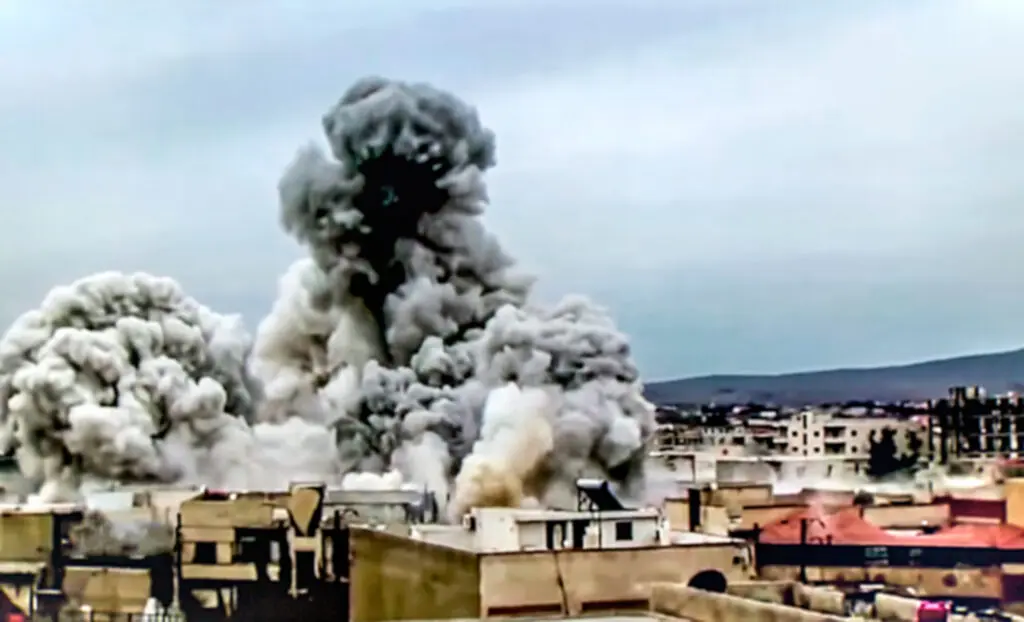
Explosions, closed sea ports, suspended scrap shipments, and the shutdown of the Straits of Hormuz have been causing widespread fear and growing uncertainty among recyclers and scrap traders across the Gulf region and beyond. Here’s what some of them are telling Recycling International.
Ibrahim Aboura, Aboura Metals, from Dubai (UAE):
‘We are hearing major liners like CMA CGM have stopped services into all Middle East ports as well as Maersk. Of course, the shutdown of Hormuz is the main concern as most shipments, especially to and from the Saudi Arabian port of Dammam and Jebel Ali in UAE, have to pass through here. At the same time, we see buyers slowing down new business with the region and being cautious by pricing and bidding for new offers.’
Faisal Al Sharif, Al Sharif Metals Enterprises, from Dubai:
‘The conflict is already hugely affecting the market. Vessels to and from Jebel Ali are currently suspended after debris from an intercepted drone hit the port in Jebel Ali causing a fire. This may well last a couple of weeks or so.’
Dhawal Shah, Metco India, from Mumbai (India):
‘It’s total chaos. Over the last two, three days, I’ve been trying to reach out to all my friends, family and business associates in the Gulf region, asking them if they were okay. Each one has a story to tell; there have been so many people who have witnessed interception of missiles from their balconies with their kids at home.
Normally, there are at least 60 to 70 flights a day from India to the Middle East. Now people are stuck at the airports and they’re trying to make alternate arrangements. At the moment, none of these air spaces is open. So again, yes, it is chaotic.
On the trade side as well. We’ve received information from major shipping lines suspending outbound shipments. Similarly with the inbound cargoes. A friend told me about a seaport with 500 containers which were meant to be put on a ship but are not going anymore now.
So it’s going to be disruptive, it’s going to be challenging. We’ve just entered a kind of a dark tunnel and we don’t know how long it’s going to take before we’ll see some light. So let’s keep our fingers crossed.’
Mir Mujtaba, president of the Bureau of Middle East Recycling, from Dubai:
‘We thank the rulers of UAE, who are taking the best care of its residents. Most of us are staying at home for safety reasons, even though we don’t see any issues happening in a place like Dubai or UAE as a country. They have asked us to stay at home, so we are just following instructions and we don’t know how long this is going to last.
On the longer term, as we all know, every time, anywhere, in any part of the world, once there is a conflict, we know that the generation of scrap will be higher but we don’t want such business. We’d rather have peace so that we all live happily and safely. Once things settle down over here, we can hopefully go back to a situation where UAE plays its world trade role, a place to connect the East, West, North and South.’
Logistics headaches: shipping lines suspend bookings
Major shipping lines including MSC, Maersk and CMA CGM have suspended all bookings for worldwide cargo to the Middle East region until further notice.
CMA CGM says that all vessels in the Gulf, or bound to the Gulf, have been instructed with immediate effect to proceed to shelter. Passage through the Suez Canal has been suspended until further notice, and vessels will be rerouted via the Cape of Good Hope, South Africa.
By-pass Colombo
Some shipping lines have introduced a so-called Emergency Conflict Surcharge at 2 000 US$ (EUR 1 725) for 20 ft and 3 000 US$ for 40 ft containers. This is not only cargo to/from the Gulf but also includes all Red Sea ports in Saudi Arabia, Egypt, Jordan, Djibouti, Sudan and Eritrea.
Maersk has redirected all sailings on its Middle East Container Line to round Africa instead of the Suez routing. It is expected that major container vessels with cargo inbound for the Gulf are discharged in Duqm, Salalah and Sohar (Oman), Khor Fakkan (UAE), and Colombo (Sri Lanka). From there they be transported by smaller vessels willing to transit.
Transshipment bottlenecks
This is expected to cause congestion issues problems in the mentioned ports, say logistics experts. ‘It will also result in congestion problems further out in Asia as carriers at some point will cease loading cargo to the Gulf if they are unsure it can go the final destination. We risk seeing Singapore, Tanjung Pelepas and Port Klang become transshipment bottlenecks for cargo which otherwise would be sent directly to the Gulf.
As a result spot rates for cargo to the Gulf regio will be rising. ‘In addition shippers should prepare for a ripple effect with rising spot rates on other major deep-sea trades as well.’
Don't hesitate to contact us to share your input and ideas. Subscribe to the magazine or (free) newsletter.


