
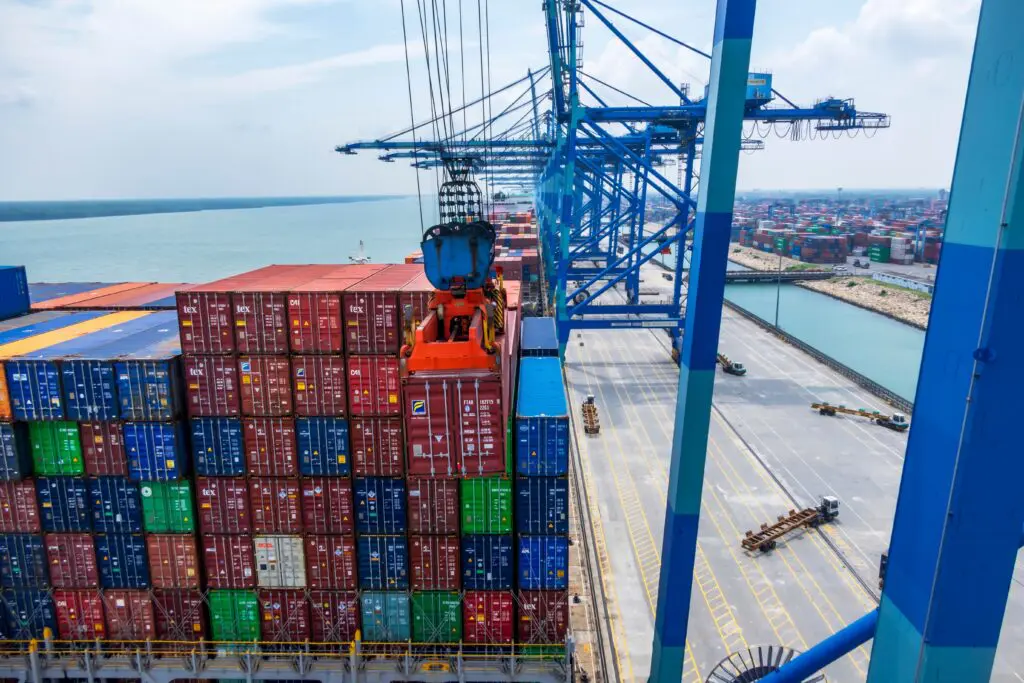
Containers detained for up to two years by Malaysian customs authorities are reported to be ‘showing signs of movement’.
According to BIR non-ferrous board member Stella Ying Wang of American Iron & Metal, a limited number of customers have managed to re-export containers impounded because they contained either contaminated scrap or were misdescribed.
She says re-export is being achieved by reclassifying the cargo under the ‘electronic miscellaneous goods’ category. ‘However, the available quota for such declarations remains highly restricted and the overall costs associated with this process are expected to be relatively high,’ Wang writes in the latest BIR Mirror for the non-ferrous division.
Accumulated charges
But she cautions that shipping lines are continuing to maintain a firm position with little willingness to negotiate or reduce accumulated demurrage and detention (D&D) charges. ‘In several extreme cases, containers have remained stranded for more than 700 days, resulting in D&D liabilities that now substantially exceed the original cargo value.’
Wang adds that the prolonged detentions have created lasting concerns and distrust among many suppliers towards Malaysian customs authorities and regulatory processes.
‘As a result, a significant number of exporters and traders have become increasingly cautious about shipping material into Malaysia, contributing to tighter raw material availability and to comparatively more constrained feedstock supply in Malaysia than in several neighbouring markets.’
New markets
Elsewhere in the region, Thailand is said to be operating relatively steadily but pressure within the market is increasing and some processors are reporting significant operational and financial strain.
‘Industry participants are becoming increasingly concerned that a situation similar to that in Malaysia could eventually emerge in Thailand if regulatory controls and customs scrutiny continue to tighten across the region.’
With this uncertainty, some processors and manufacturers are said to be actively exploring alternative processing and production destinations. Pakistan and Bangladesh are attracting attention because of lower operating costs and developing industrial bases.
At the same time, Vietnam remains one of the most attractive alternative markets in the region. Its annual demand for ADC12 aluminium alloy ingots is estimated at approximately 120 000 tonnes, with domestic production believed to satisfy only around half of the total, leaving the market heavily reliant on imported raw materials and secondary aluminium feedstock.
Don't hesitate to contact us to share your input and ideas. Subscribe to the magazine or (free) newsletter.


