

More than 60 000 tonnes of PET trays now find their way back into food packaging every year at a single site in the Netherlands. Dutch firm Cirrec says that equals over three billion ready-meal trays.
At Cirrec’s recycling plant in Duiven, tray-to-tray recycling has moved beyond pilot scale. The bottleneck was never washing or extrusion. It was sorting.With the help of recycling technology specialist Steinert, Cirrec can transform all the plastics into food-grade material, thus avoiding downcycling or exports.
When chemistry is not enough
Under EU Regulation 2022/1616, only plastics that have already been in contact with food may re-enter the food packaging cycle. A ready-meal tray qualifies. A PET blister pack for screws does not.
From a chemical point of view, however, both materials are identical. Conventional near-infrared (NIR) sorting systems see PET as PET. For food-grade recycling, that is no longer sufficient.

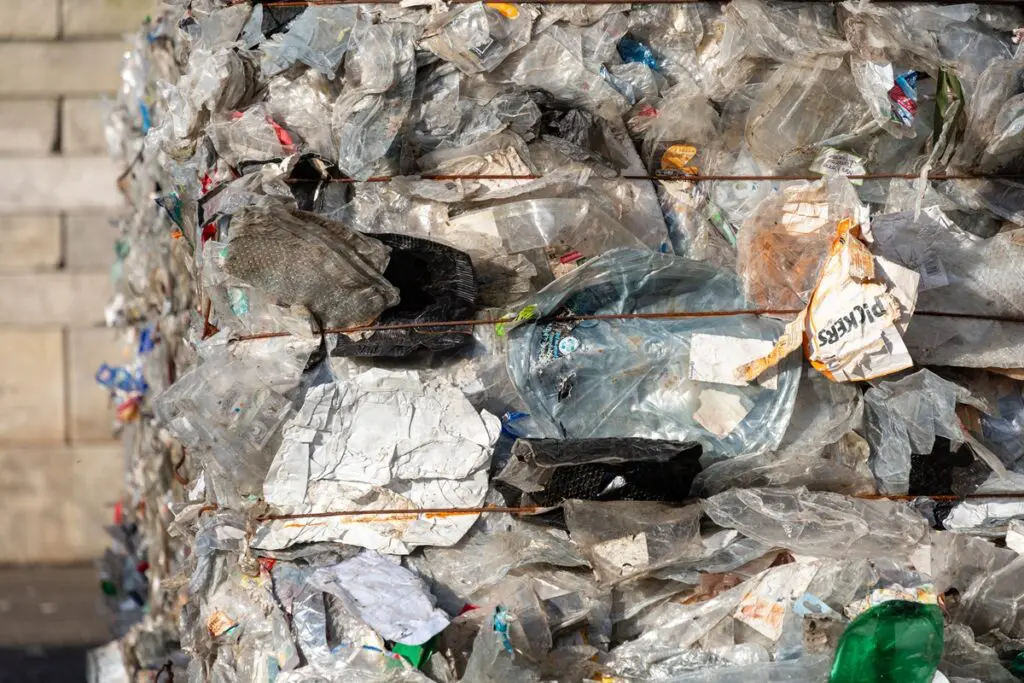
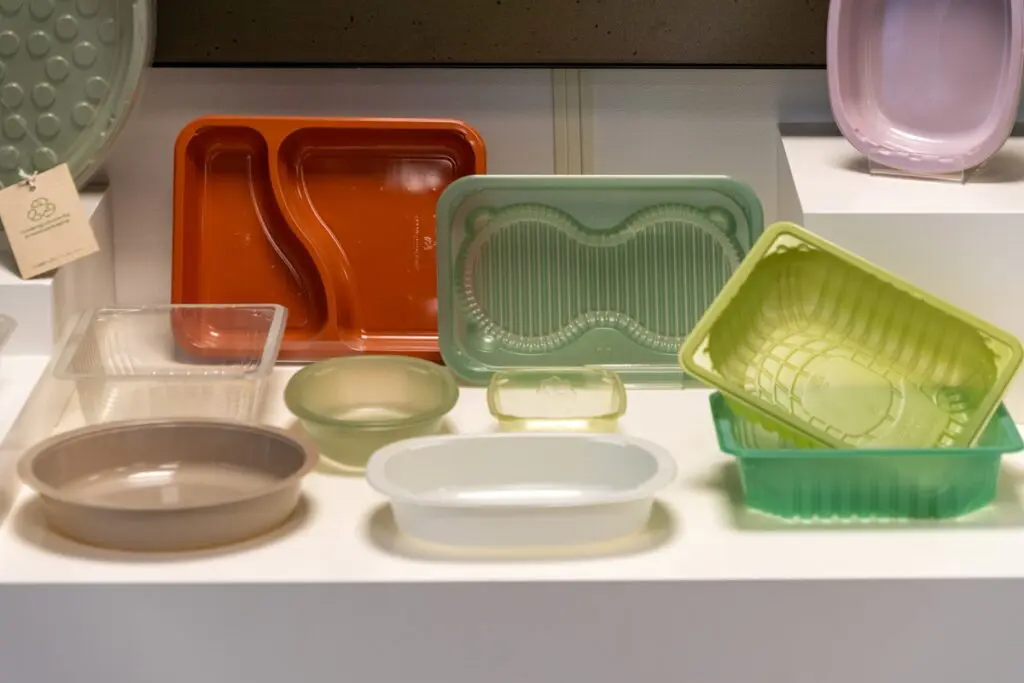
‘Achieving the standard required for food-grade recycling has always demanded exceptional precision in sorting,’ says Simone Tirelli, technical project manager at Faerch. ‘Here, the challenge is not the volume. It is the detail.’
Cirrec is part of the Faerch group, which specialises in thermoformed food packaging. The company’s business case depends on keeping post-consumer trays clean enough to go straight back into new food packaging.
Smart sorting revolution
The breakthrough came with sensor fusion and artificial intelligence. At the Duiven site, Cirrec operates three Steinert unisort pr evo 5.0 sorting systems. Each tray is analysed individually using two data streams at the same time. A hyperspectral NIR camera captures chemical information, while a colour camera records visual features.

Crucially, both sensors observe the same point on the material simultaneously. This alignment improves data quality and allows for more effective AI training.
The combined data feeds into Steinert’s intelligent object identifier, an AI-based sorting programme trained specifically to recognise food packaging. Rather than relying on chemistry alone, the system identifies patterns associated with food trays, including shape, surface texture and typical printing.
The result is a sorting purity exceeding 95%, the threshold required for food-grade recycling.
How does it work?
Once purity is achieved at the sorting stage, the rest of the process becomes predictable. Incoming bales first pass under a Steinert UME overhead magnet to remove ferrous metals. A Canmaster eddy current separator extracts non-ferrous metals. The three Unisort PR EVO systems then perform optical sorting, after which the material is ground, washed and processed into flakes and pellets.
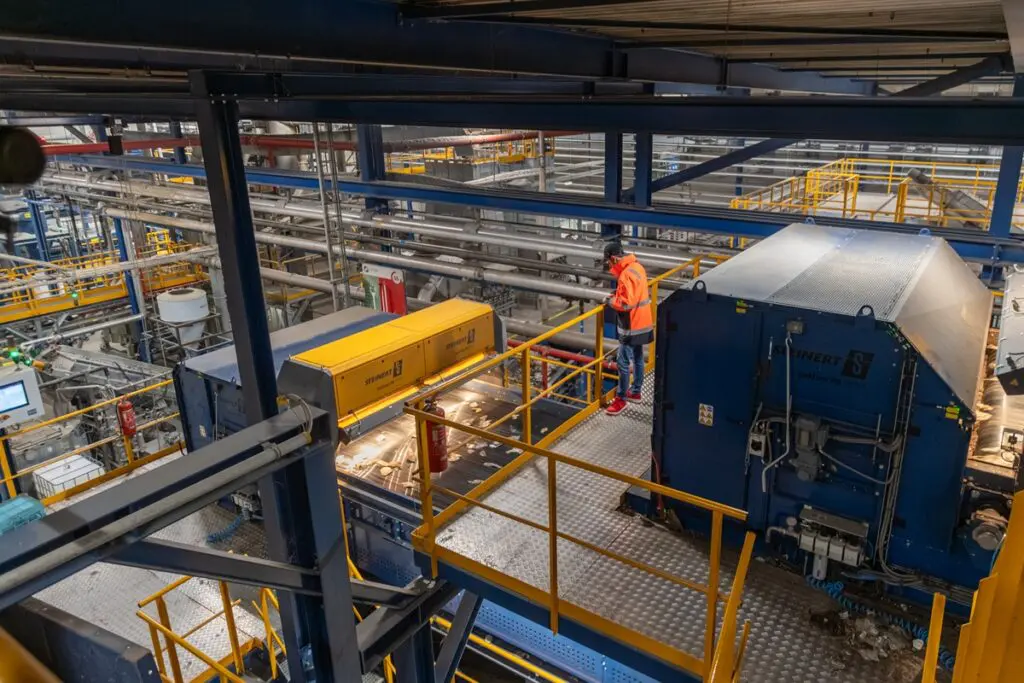
Sorting accuracy defines what is possible downstream. Without it, food-grade output would remain theoretical.
From waste to new trays
The recycled material feeds directly into production within the Faerch group. On average, new packaging contains around 70% recycled content.
According to a life-cycle analysis, tray rPET produced at Cirrec generates 57% fewer CO₂ emissions than virgin PET. For brand owners facing both regulatory pressure and carbon reporting requirements, that reduction matters.
Cirrec is currently the only operator worldwide recycling post-consumer PET trays into food-grade material at industrial scale. For the wider recycling sector, it demonstrates that circularity for rigid food packaging is technically and economically viable — provided sorting performance is high enough.
An evolving system
Steinert points out that the intelligent object identifier is not fixed to a single application. The AI model can be retrained as input streams change or new packaging formats enter the market. No hardware replacement is required. Adjustments happen through software and data.
What works today in Duiven can be scaled elsewhere. More importantly, it shows that tray-to-tray recycling is no longer an experiment. It is an operating industrial process, built on the understanding that in plastics recycling, sorting is not a step — it is the foundation.
About Steinert
The history of Steinert dates back more than 135 years: the family-owned, Cologne-based business is one of the world’s leading experts in sensor sorting and magnetic separation for waste, glass and metal recycling as well as mining.
With 550 employees, Steinert generates an annual turnover of approximately EUR 180 million. In addition to 50 sales partnerships and joint ventures across the globe, the company has subsidiaries in Germany, Australia, Brazil and the US.
Don't hesitate to contact us to share your input and ideas. Subscribe to the magazine or (free) newsletter.


