
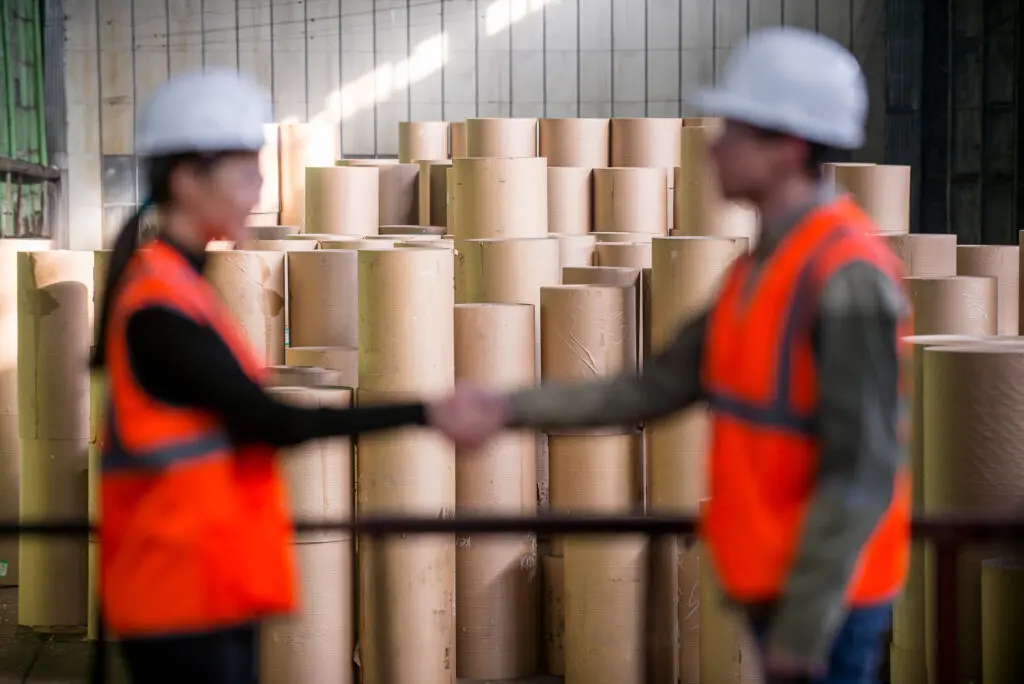
Around 500 companies from the recovered paper sector gathered in Berlin to send a ‘strong signal’ of commitment to an industry under pressure.
On the 28th International Waste Paper Day, organised by the bvse, md Eric Rehbock set a clear tone. The sector must navigate ‘one crisis after another’, as economic and geopolitical shifts reshape global markets, he said.
Staying competitive
Rehbock insists ‘the previous order is definitively a thing of the past’. As a result, recyclers must adapt quickly to new economic realities.
At the same time, regulatory pressure is building, specifically regarding the much-discussed the Digital Waste Shipment (Diwass) system. Entering force on 21 May, it introduces cross-border registration of waste shipments in the EU, much to the dismay of the sector.
Recyclers argue this is overregulation rather than a tool for greater efficiency and transparency. ‘There appears to be a transitional arrangement for non-hazardous waste, Rehbock notes.
‘The German federal states should utilise this transitional arrangement and not make life unnecessarily difficult for companies.’
Meanwhile, high diesel prices and energy costs continue to squeeze margins and bvse is calling for structural relief. ‘We need a permanent reduction of energy and electricity taxes to the European minimum,’ Rehbock says. ‘We need competitive energy prices so that the economy can produce competitively.’
Register to keep business
Looking ahead, bvse policy expert Dr Olaf Kropp highlighted the operational impact of Diwass. ‘Logging contracts and shipments two days ahead of time requires a lot of preparation and planning,’ he says. Documents must also be available digitally during transport which means drivers need real-time access to paperwork.
At the same time, a paper backup is essential in case of connection issues. Kropp also warns that recyclers depend on registered logistics partners.
‘If they don’t exist in the system, they cannot be selected, so recyclers cannot do business with them anymore as of 2027.’ He urges companies to act now. ‘Don’t wait until the last minute… if you don’t get ready in time you will miss the mark and may miss out on business.’
AI offers advantages
However, emerging technology may offer a life raft, according to keynote speaker and ‘AI evangelist’ Andreas Klug. AI is already yielding 10% time-efficiency benefits for 42% of German businesses in the waste management sector, he says, and this figure is quickly growing.
‘It’s the golden age for entrepreneurship, start-ups and AI. You can accomplish a lot more today than ten years ago.’
Klug argues recyclers should treat AI as a shredder or crane upgrade. ‘You can’t be competitive if you keep using old equipment.’
In practice, AI has notably improved sorting speed and safety. For instance, smart systems detect hazardous items and reduce fire risks. In addition, digital tools optimise collection routes and eliminate empty runs.
Don't hesitate to contact us to share your input and ideas. Subscribe to the magazine or (free) newsletter.


