
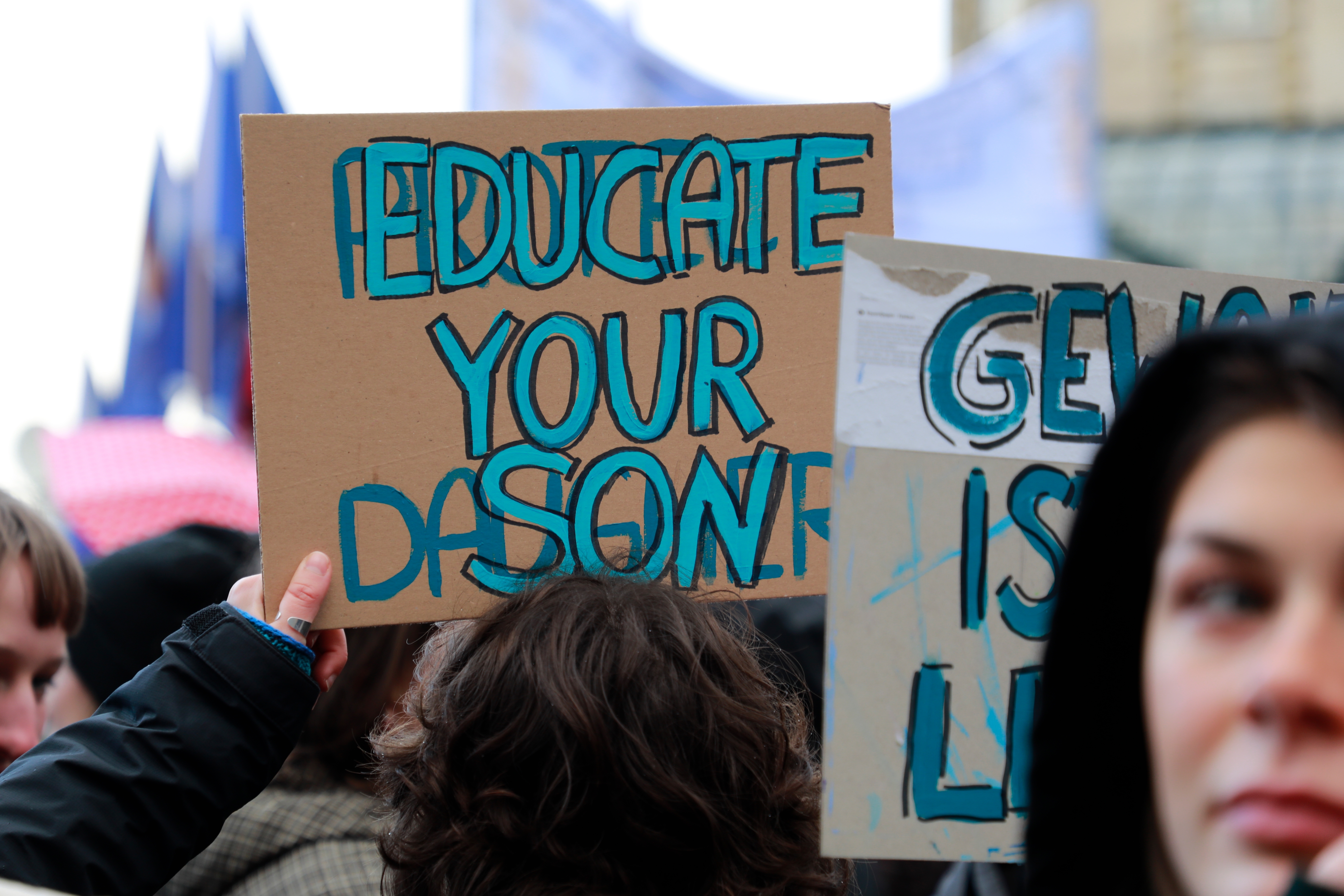
I had just left the International Automotive Recycling Congress (IARC) in Hamburg. After two days of presentations, plant tours and conversations my head felt full. So I went for a walk to clear it. Instead, I found myself in the middle of a protest. ‘My spring vibes are anger’. The words stopped me in my tracks.
Hundreds of women had gathered on the square in front of the Rathaus. Young girls, mothers, grandmothers. Their signs spoke plainly: ‘Stop violence against women’; ‘Men of quality don’t fear equality’; ‘Put shame where it belongs’. Others were sharper: ‘Offenders protect offenders.’
The atmosphere was peaceful yet charged. Women shared their stories on stage. The crowd cheered, then booed at what was seen as weak legislation. Police officers stood by watching. No intervention was needed.
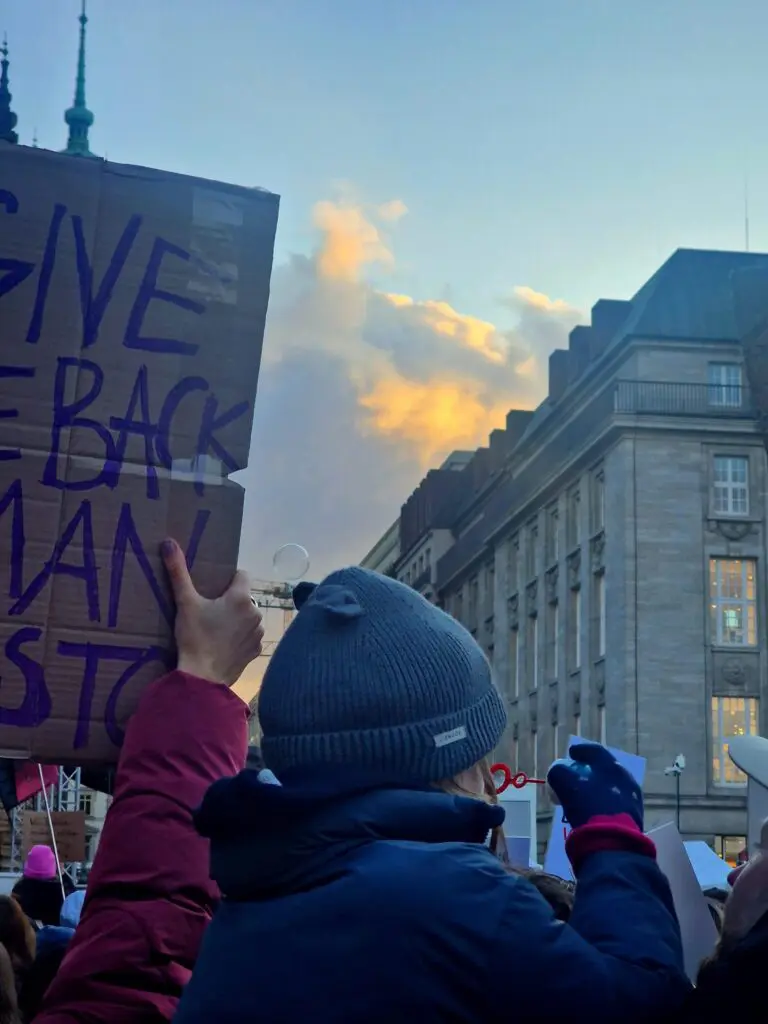
One moment stayed with me. A young girl sat on her mother’s shoulders, blowing bubbles into the evening air as the sky turned orange-pink. Around her, anger and hope existed side by side.
It struck a chord.
Earlier that day, in the conference hall, we had discussed innovation, efficiency and the future of materials. Yet here, the conversation was about something more fundamental: being seen, being heard, being valued.
That theme had surfaced during an earlier visit to Aurubis’ copper smelter. The company’s Women 4 Metals initiative aims to boost female participation in an industry where representation remains stubbornly low. Women hold around 15% of roles across the metals sector. At Aurubis, the figure is closer to 8%.
‘You can’t be what you can’t see,’ business strategy expert Anastasia Khmilevska observes. She admits she once never saw a place for herself in the sector. Now, she encourages others to follow her unexpected path.
Change is happening, I realise, as several female names pop into my mind. In the UK, Amy Bird has launched the Women in Recycling conference, drawing strong interest. In the US, ReMA president Robin Wiener continues to engage policymakers at the highest levels, defending the role of scrap. This mirrors the work Susie Burrage undertakes as BIR’s president. In Belgium, Catherine Lenaerts co-launched the new ELV Forum, bringing carmakers and recyclers closer together. Vanessa Montagne, general manager of French car recycling association Recycler Mon Vehicle, integrated a recycling game into the popular Fortnite franchise.
These female entrepreneurs reflect a broader need. Our industry faces complex challenges of resource scarcity, geopolitics and circularity at scale but they cannot be solved with the same thinking that created them. We need broader perspectives and new voices at the table.
As Khmilevska put it, attracting new talent is essential. ‘That includes women, not as a side note, but as part of the solution.’ Representation matters. Action matters even more. ‘Don’t wait for someone to call you a role model,’ she insists. ‘Become a mentor. Take the lead.’
While it is easy to focus on processes and performance, progress depends on people. The people operating plants, designing systems and making decisions. Hamburg reminded me of that both inside the conference halls and outside, in the Rathaus square.
In business and in society, real change starts when people speak up.
Don't hesitate to contact us to share your input and ideas. Subscribe to the magazine or (free) newsletter.


