
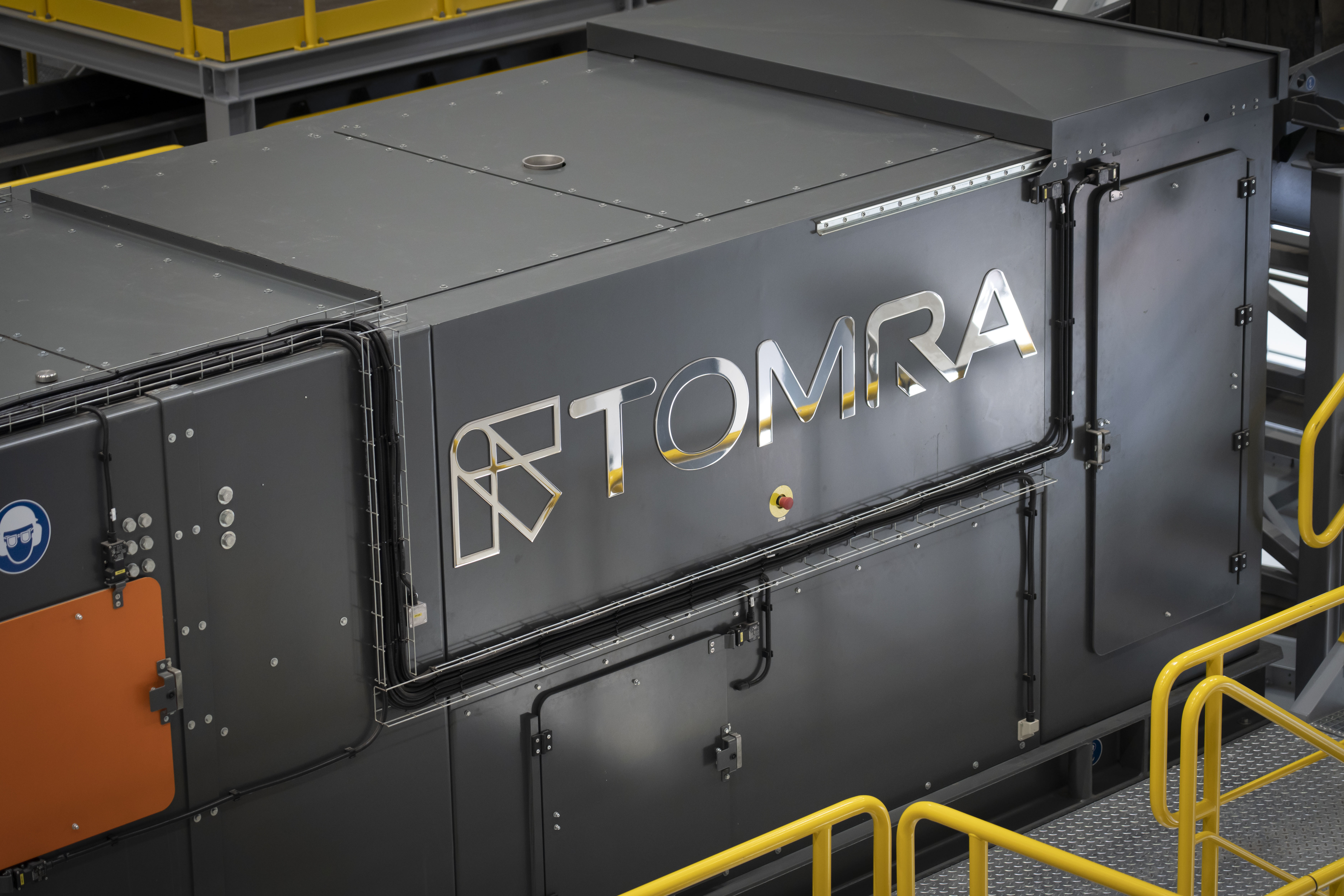
Tomra Recycling has expanded the applications of its Autosort Pulse sorting system beyond aluminium alloy separation.
The dynamic laser-induced breakdown spectroscopy (LIBS) technology can now sort stainless steel, heavy metals, magnesium and incinerator bottom ash (IBA). Tomra’s wider application range gives recyclers more flexibility when processing mixed metal streams.
Autosort Pulse was launched in 2023 for aluminium alloy separation. The system identifies materials by their elemental composition. It separates aluminium into different alloy groups, including the 5xxx and 6xxx series.
Tomra says recyclers can now use the same machine for several sorting applications instead of investing in dedicated equipment.
Broader sorting capabilities
Dynamic LIBS analyses the elemental composition of each object rather than its surface. According to Tomra, repeated laser pulses penetrate paint, coatings, oxidation and dust. This allows the system to identify the underlying material more accurately. The approach is particularly suited to challenging streams such as heavy metals and IBA.
The system can separate copper, brass, zinc and stainless steel from mixed heavy metal streams. It can also distinguish between zinc sheet, Zamak and coated materials.
For stainless steel recycling, Autosort Pulse separates grades including 316, 304 and 201. This enables recyclers to produce higher-value fractions from mixed feedstock. Tomra has also introduced magnesium recovery from floated super-light fractions.
For IBA processing, the system separates mixed aluminium alloys as well as copper and brass from complex metal streams recovered after municipal waste incineration.
First commercial application
One of the first companies to use the expanded functionality is Turkish brass producer Kaplan Pirinç Çubuk A.Ş. The company installed Autosort Pulse to separate brass into different grades for European and non-European customers.
‘Most of our brass input is coated and we need to identify specific elemental compositions,’ says owner Safa Tayyip Topçuoğlu. ‘The system allows us to look beneath the surface and recover more value from our scrap. It also reduces the amount of alloying material we need to add.’
Tom Jansen, vice president and head of segments at Tomra Recycling, notes that the company has continued developing the technology since its launch.
‘Customers can now use one system across several material streams, including stainless steel, IBA and heavy metals,’ he points out. ‘The technology stays the same, while the application changes to meet different processing needs.’
Tomra also trains customers to adapt sorting programmes as feedstock changes. The company believes this helps recyclers respond more quickly to changing material streams and market conditions.
Don't hesitate to contact us to share your input and ideas. Subscribe to the magazine or (free) newsletter.


