
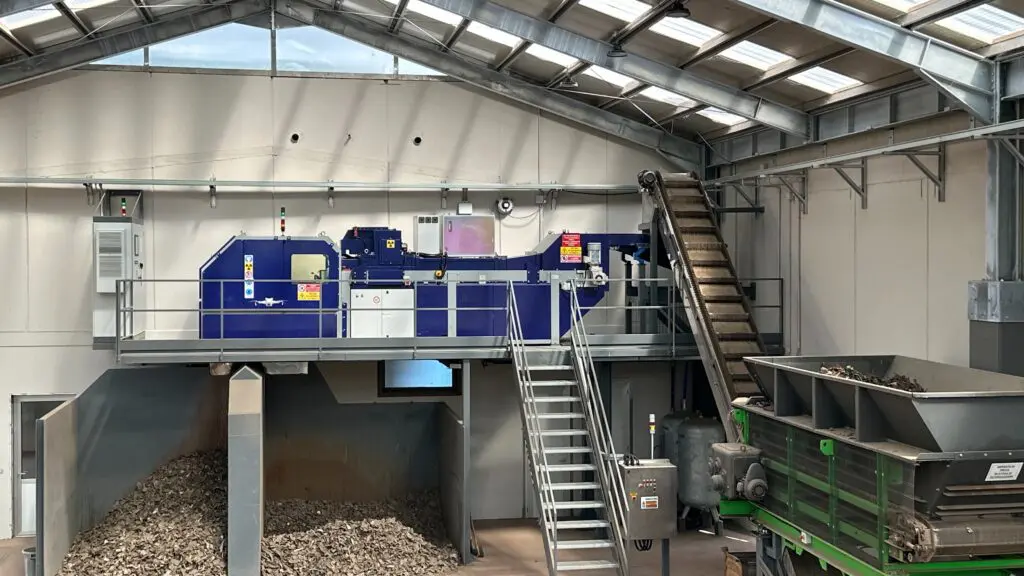
In many recycling plants, separating light metals from heavy metals is only the first step in upgrading mixed metal scrap. X-ray transmission (XRT) technology is widely used for this initial separation.
By analysing how X-rays pass through each piece of material, the system identifies differences in density and separates light metals from heavier metals.
However, the heavy fraction produced by this process is rarely uniform. It usually contains a mixture of heavy metals – copper, brass, zinc and stainless steel – that still have to be separated to maximise their value. At the same time, this stream can also contain aluminium.
Because XRT classifies materials on their density and thickness, large or particularly thick aluminium pieces such as extrusion breakages or compact aluminium components can sometimes appear as ‘heavy’. These pieces are typically rejected with heavy metals and end up in the heavy fraction of the process.
HIDDEN IN THE STREAM
For recyclers, this means that valuable aluminium can remain hidden in a stream that is being sold as mixed heavy metals. Recovering that aluminium while also separating the heavy metals requires more information than density alone can provide. X-ray fluorescence (XRF) technology provides this additional insight.
When exposed to X-rays, each metal emits characteristic photons that reveal its chemical composition, allowing the identification of elements such as copper, zinc or lead and distinguishing between different alloys. The SGM XRF-T technology combines XRT and XRF in a single sorting unit.
The XRT analysis determines the density of each piece while the XRF sensor simultaneously identifies its elemental composition.
MORE ACCURATE
This combined approach allows recyclers to separate heavy metals and their alloys more accurately while the primary XRT process also identifies aluminium pieces wrongly classified as heavy.
Installed downstream of the primary XRT sorter, the XRF-T processes the heavy fraction, separating copper, brass and stainless steel while recovering aluminium pieces that would otherwise remain hidden.
By combining XRT and XRF in the same machine, recyclers can achieve these results without installing two separate sorting units dedicated to each technology, reducing equipment costs and saving valuable space in the plant.
Want to know more?
Visit SGM at IFAT 2026 in Munich
Location: Hall B5, booth 438
www.sgmmagnetics.com
Don't hesitate to contact us to share your input and ideas. Subscribe to the magazine or (free) newsletter.


