
The war in the Middle East, and especially the closure of the Strait of Hormuz, is causing increased logistical problems for the delivery of recycling machinery.
Shipment of machines and spare parts from Europe to the Gulf region is being disrupted, and manufacturers are looking for alternative routes to get equipment and components to customers on time which leads to higher costs.
Cable strippers for Abu Dhabi
At the IFAT trade show in Munich, Germany, the impact of the conflict in the Middle East was the talk of the town. Bronneberg is one of many recycling tech providers concerned about the situation.
The company has many customers in the Middle East, particularly in the Gulf region. One customer is Union Copper Rod, a major copper recycler in Abu Dhabi, UAE. ‘We previously supplied them with a cable stripper, and now they have ordered a few more units,’ Alexander Jegerings tell Recycling International.
‘However, due to the closure of the Strait of Hormuz, we cannot reach Abu Dhabi by sea. So we’re looking at alternative routes, including via Oman or through Jeddah in Saudi Arabia and then onward over land.’
Just in time
Recycling machinery producer Panizzolo is also experiencing disruption due to the war. At the end of February, it completed a 28-tonne-per-hour shredding and separation line at Emirates Global Aluminium (EGA) in Abu Dhabi, just days before the first bombs fell on Iran.
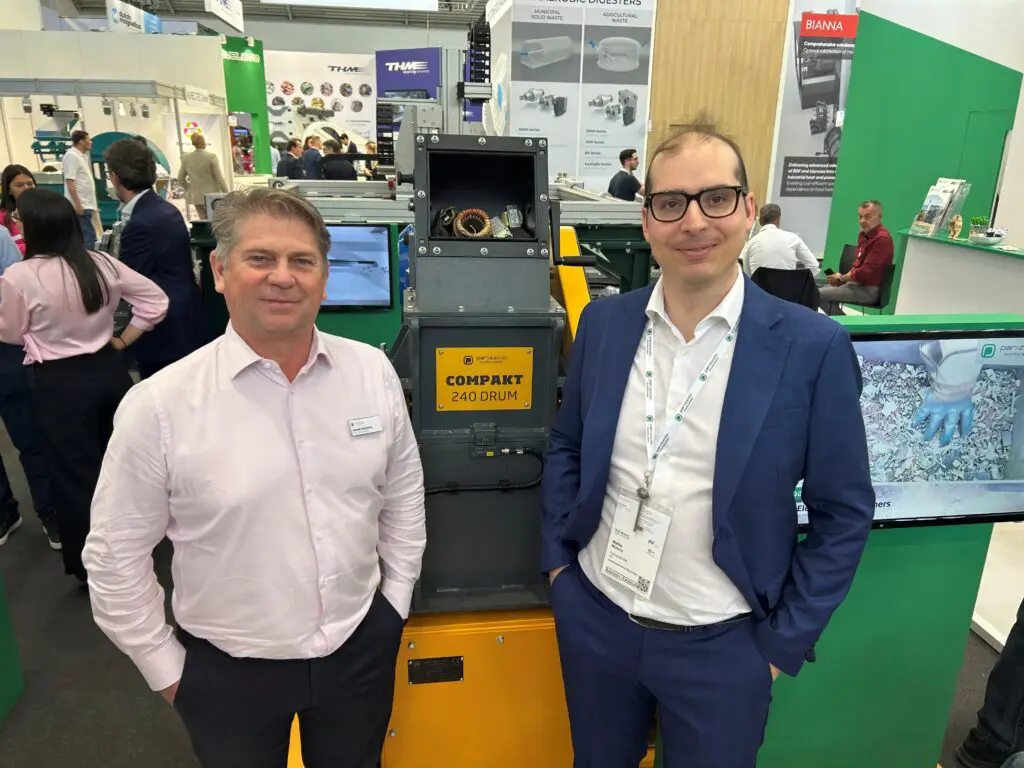
‘The official opening was scheduled for April but it has been postponed because of the war,’ says Mattia Molena of Panizzolo in an interview with Recycling International.
Shear to Dammam
Meanwhile, shear manufacturer Vezzani, like other suppliers, is hoping for better times. By the end of 2026, a shear from Vezzani is scheduled to be shipped to a customer in the port city of Dammam, and this can only be done by sea via the Strait of Hormuz.
‘If that route is still be closed by then, it will have to go via Jeddah and then travel hundreds of kilometres through the desert,’ says Vezzani’s ceo Gabriele Merlo.
Don't hesitate to contact us to share your input and ideas. Subscribe to the magazine or (free) newsletter.


