
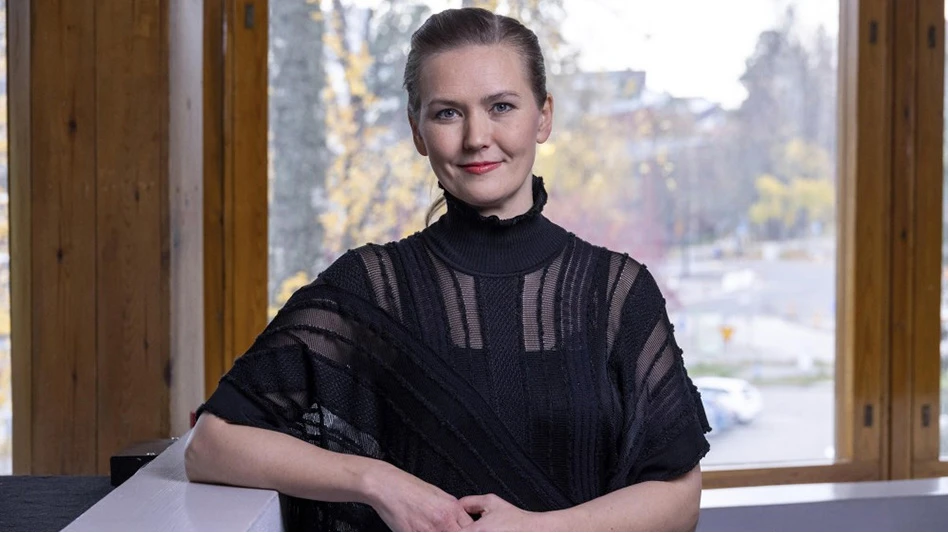
Finnish hydrometallurgy researcher Mari Lundström has received the Faraday Medal in electrochemistry from the Royal Society of Chemistry.
The award recognises Lundström as a pioneer in the field over almost two decades. She is professor of hydrometallurgy at Aalto University in Finland and her research focuses on developing more sustainable methods for recovering metals from increasingly complex raw materials.
Lundström is the first Finnish researcher to receive the medal since its launch in 1977.
EDRR targets low metal concentrations
One of Lundström’s key innovations is electrodeposition-redox replacement (EDRR). The technique isolates precious metals from concentrations below those targeted by conventional separation methods.
EDRR recovers materials including gold, silver and platinum while avoiding the use of volatile chemicals.
Lundström also co-founded Finnish spin-off Elmery in 2022 to commercialise EDRR. The company continues developing the technology with industrial partners internationally.
Feeding the green transition
‘As the world must transition towards a more circular economy, growing demand for metals means increasingly lower-grade and more impure raw materials must be processed,’ Lundström explains. ‘New electrometallurgical methods can decrease chemical dependency while directly enabling the use of green electricity in critical materials recovery.
‘Metal production will always have environmental impacts,’ she adds. ‘Our responsibility is to make it as sustainable as possible.’ In her view, this means avoiding shifting processing and its environmental consequences elsewhere.
‘Without new research and expertise, we simply won’t have enough metals to support the green transition.’
Europe faces raw material challenge
Lundström highlights Europe’s position in global metal markets. ‘Europe currently consumes around 20% of the world’s metals but produces only a few per cent.’ It means advanced metal recycling is key to strengthening European competitiveness and supply security.
‘Finland has unique conditions for the green transition because we have a long history of mining and metal refining. Although the use of metals is changing, we have training and expertise that can be applied in the future.’
Don't hesitate to contact us to share your input and ideas. Subscribe to the magazine or (free) newsletter.


