
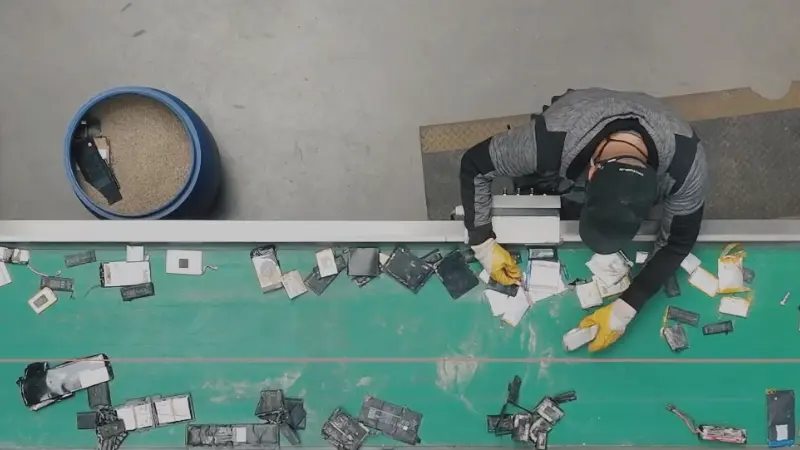
Inside Accurec’s Krefeld facility, lithium-ion batteries are being turned back into battery grade raw materials. Recycling International visited the German recycler shortly after it officially launched its patented recycling line in December, a system that can process around 6 000 tonnes per year and is set for further expansion.
‘We had been running the pilot line here since 2017 and things have been going very well,’ says Simon Bremer, head of business development at Accurec. ‘Our complete solution now yields battery grade lithium carbonate.’
Founded in 1995, Accurec has gradually expanded its operations from battery sorting into full lithium-ion battery recycling. ‘What we’ve been doing over the last few years is testing new methods and equipment and adding, step by step, more processing capacity,’ Bremer explains.
Patented solution
At the Krefeld plant, lithium-ion batteries undergo a combination of thermal pretreatment, mechanical processing and hydrometallurgical refining. Accurec acquired a patent in 2021.
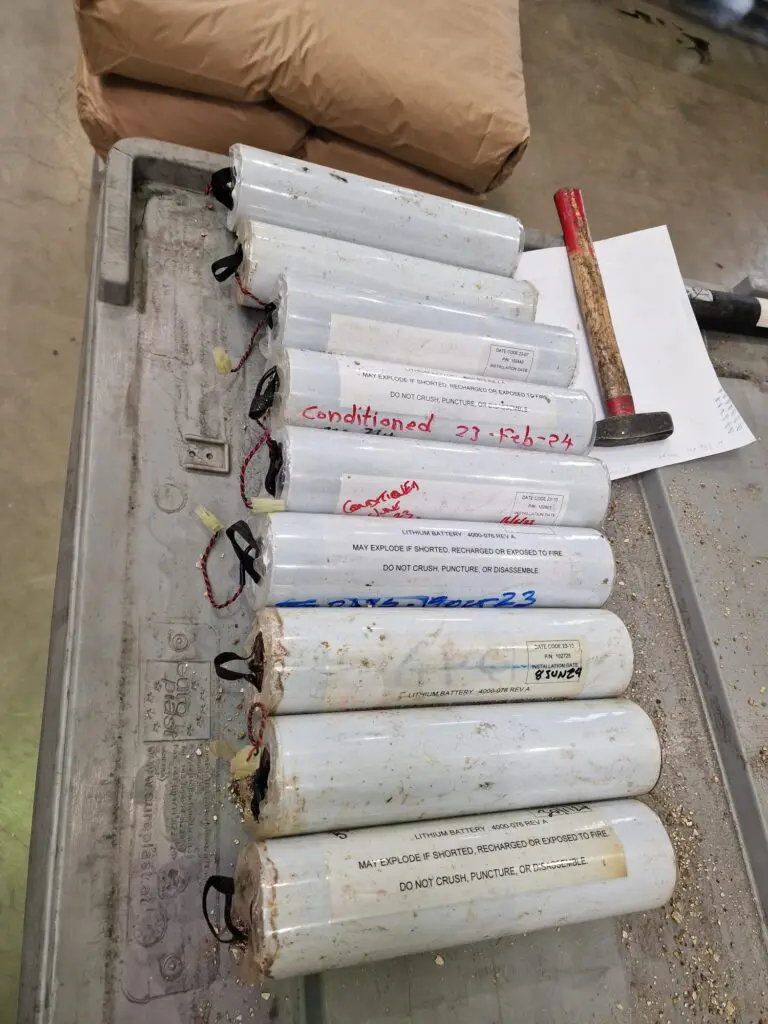
First, batteries are pre-sorted by hand as a quality control step, followed by optional discharging where required. Thermal treatment safely deactivates the batteries before shredding and separation.
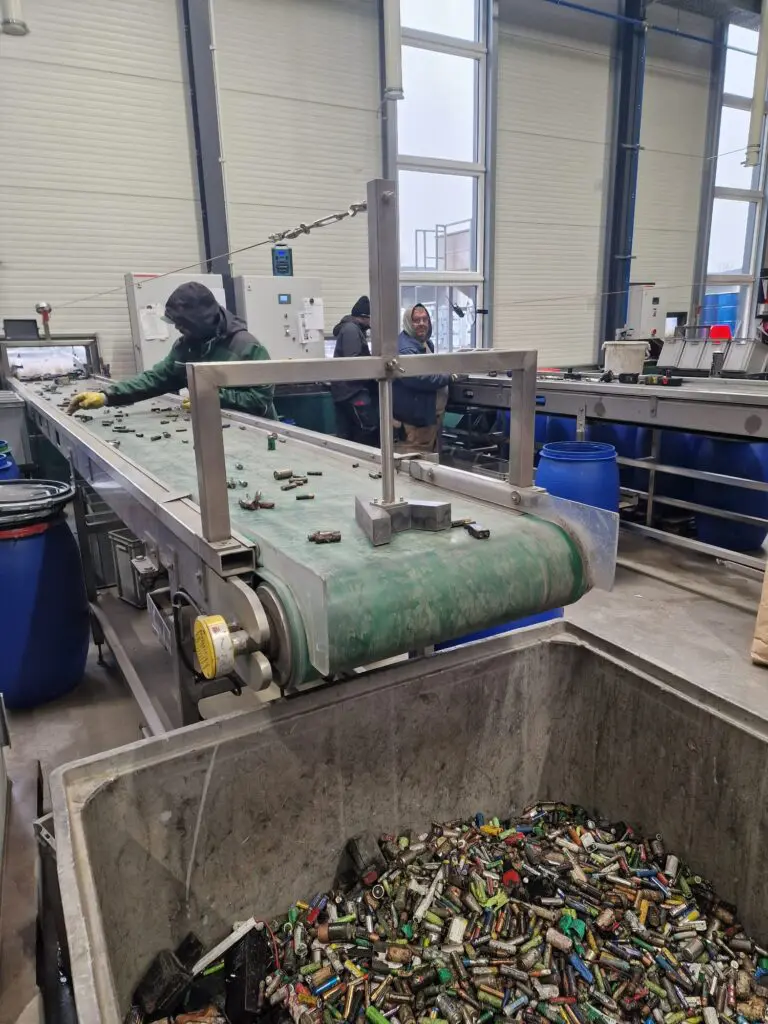

E-cigarette batteries are a common sight these days.

The resulting black mass is refined into high-purity raw materials, including lithium, nickel and cobalt. According to Accurec, the process delivers black mass with a purity of 99%, making it suitable for direct reuse in battery production.
‘It’s been a lot of trial and error,’ Bremer adds. ‘We really did our homework. I’m proud that we don’t rely on outside parties for our know-how, and even prouder of the results.’
Central to the process are two thermal treatment units, known as Terra and Tunnel, each capable of handling batches of up to 700 kg of batteries. The larger unit is designed for continuous operation.
Anticipating bigger volumes
Most of Accurec’s annual feedstock of 6 000 tonnes of lithium-ion batteries come from portable consumer electronics. Production scrap and recalled products remain the main feedstock streams in larger applications, while end-of-life EV batteries account for around 15%.
Around 60% of the batteries originate from neighbouring countries such as the Netherlands, Belgium and Scandinavia, reflecting strong collection schemes and high EV uptake in those markets.
Accurec plans to expand capacity at the Krefeld site to 20 000 tonnes by mid-2028. This would involve constructing an additional processing hall and installing a duplicate thermal treatment unit and hydrometallurgical line.
This would help to capitalise on the growing EV stream predicted to hit the market by 2030. By that time, the recycler may have invested in an automated sorting line, too.
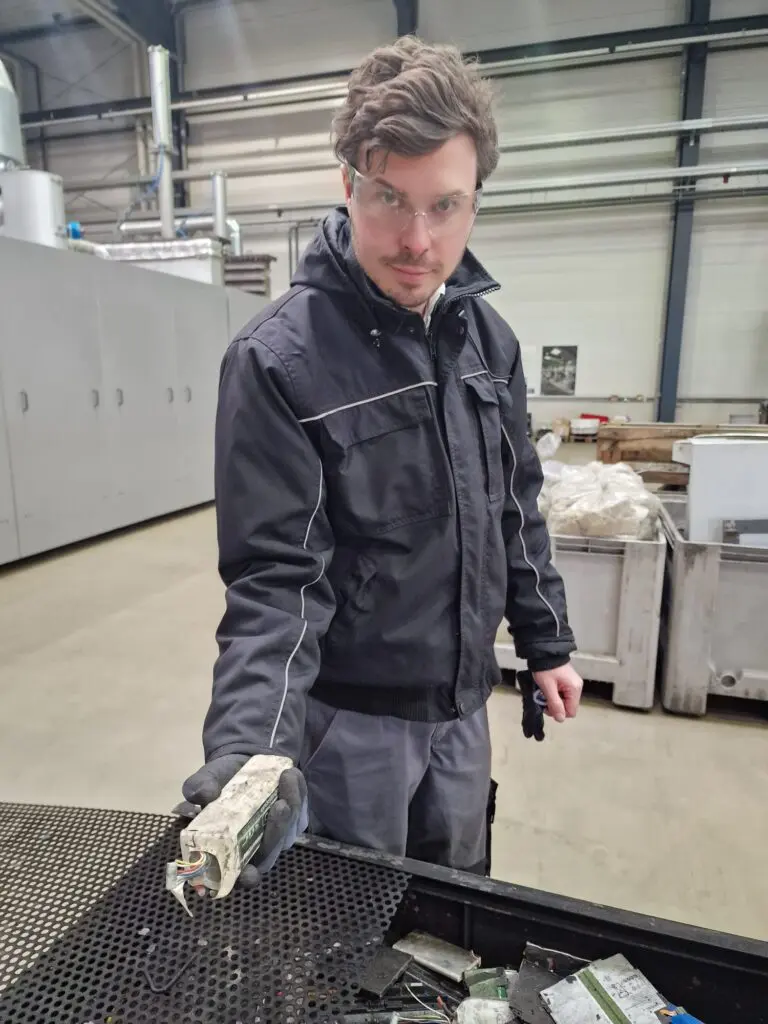
‘There is still room to level up,’ Bremer says. ‘We’re preparing the expansion paperwork and are very excited about pursuing new growth.’
Public opening
Accurec’s official opening ceremony in December was attended by EU Environment Commissioner Jessica Roswall, who described the facility as a strategic project for Europe’s critical raw materials supply. She said plants such as Accurec’s would help the EU meet rising lithium demand while strengthening industrial resilience.
Bremer notes that Accurec’s team and industry insiders already knew about the impactful work going on at Krefeld. ‘But it should be public knowledge. Recyclers often think too practically and keep things to themselves. Our industry is humble like that. Innovation deserves to be celebrated. It also makes it easier to find partners and acquire funding for future projects.’
Don't hesitate to contact us to share your input and ideas. Subscribe to the magazine or (free) newsletter.
 Loading ...


