
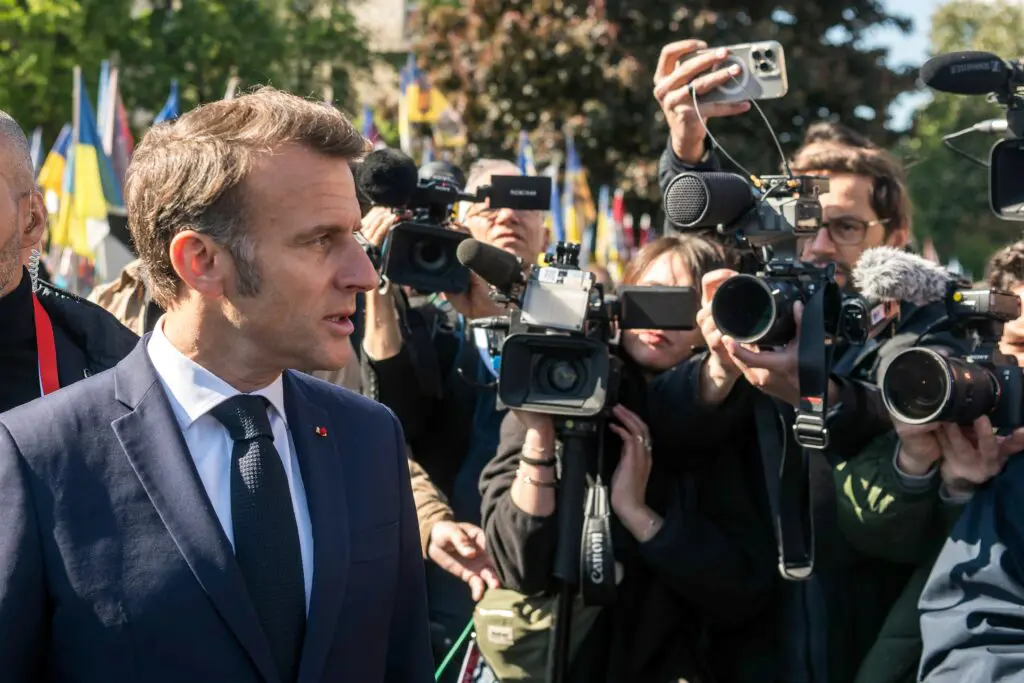
French president Emmanuel Macron is urging stronger action on plastic recycling as EU levy payments and 2030 targets increase pressure on France’s waste system.
Speaking at a circular economy event in Paris, Macron links France’s recycling shortfall to rising financial contributions to the EU budget. These payments are tied to the volume of non-recycled plastic packaging waste.
‘Explain to people that we can afford to pay EUR 1.5 billion to the EU every year because we are not meeting the commitments we have set ourselves,’ Macron is reported as saying by EuroAktiv.
France is working to improve recycling performance and reduce volumes of packaging waste sent to landfill or incineration.
EU levy raises stakes
Since 2021, the EU has applied a levy of EUR 0.80 per kg of non-recycled plastic packaging waste.
Although paid by member states, the mechanism has increased political and economic pressure to improve domestic collection and recycling systems.
France must reach a 55% recycling rate for plastic packaging by 2030. However, policymakers acknowledge that current progress is insufficient.
Macron wants ‘concrete measures’ to close the gap, including stronger collection systems and improved recycling infrastructure.
The government is also assessing how to recover an additional 225 000 tonnes of plastic waste per year.
Reuse systems and eco-design
Deputy environment minister Mathieu Lefèvre insists France must reduce waste at source. He calls for less unnecessary packaging, more bulk purchasing options and faster adoption of eco-design across industries.
‘Less is more,’ he says, adding that prevention will be essential to meet long-term targets.
France is also preparing for stricter EU rules under the Packaging and Packaging Waste Regulation, including a 90% collection target for beverage bottles by 2029.
Meanwhile, the government plans to launch a national reuse conference to align standards and logistics for refillable packaging systems.
Industry groups warn that implementation challenges remain, particularly around investment costs and regulatory alignment across EU member states.
Source: EuroAktiv
Don't hesitate to contact us to share your input and ideas. Subscribe to the magazine or (free) newsletter.
 Loading ...


