
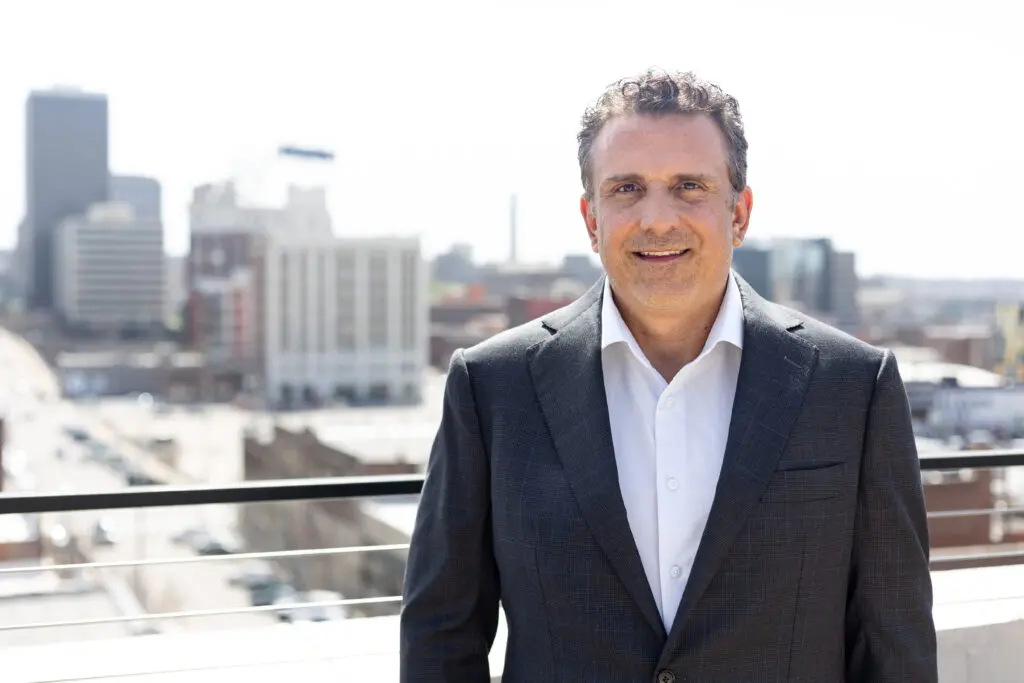
Jerrit Burgess is the second generation to lead family owned Scrap Management Industries of Missouri, USA. What started 53 years ago with one pick-up truck is now among the largest recycling businesses in the Midwest. Just before New Year, SMI acquired Kansas-based Allmetal Recycling. What’s next?
HOW BIG IS SMI TODAY?
‘In 2025, SMI processed and sold some 685 000 tonnes of ferrous scrap and Allmetal adds roughly 200 000 tonnes. On the non-ferrous side, SMI processed about 40 000 tonnes and Allmetal about 30 000 tonnes. The combined company now operates 19 facilities across Missouri, Kansas and Oklahoma, and runs five car shredders.
On the transportation side, we are running about 90 power units and more than 4 500 boxes and trailers, which gives us good coverage for both industrial accounts and retail yards in our region.’
HOW WOULD YOU DESCRIBE THE CURRENT STATE OF THE SCRAP BUSINESS?
‘I am bullish on the scrap business as we begin 2026. Copper is testing alltime highs, and the use of aluminium is growing in almost every sector which really increases the value of scrap. On the ferrous side, we are also seeing stronger demand, even if prices are not moving as dramatically as copper and aluminium. The bigger picture
is that metals and other commodities are always going to be in demand.
That does not mean the business is easy. There is still volatility. And managing risk, costs, and inventory is critical.
But when you look at the direction of the market and the role scrap plays in society, I feel good about the future
of the business.’
WHAT’S THE SECRET OF SMI’S SUCCESS?
‘The key is that we have continued to think and operate like a local family yard even as we have grown. We know our customers by name, we show up in the communities where we operate, and we make decisions with a longterm view instead of chasing quick wins. Another key to our success has been hiring and promoting talented people and then allowing them to do the jobs we hired them to do.
If you try to micromanage every detail, you run out of bandwidth and the company stops growing. When you trust your team and give your people room to lead, your company becomes stronger, and you put yourself in a better position to handle the ups and downs of the market.’
WHAT’S THE BIGGEST CHALLENGE WHEN YOU TAKE OVER ANOTHER COMPANY?
‘Acquisitions are always about people first. With the Allmetal acquisition, we are welcoming around 230 new employees. People are often apprehensive to change, and this is a big change. Our employees rightfully want to know how the acquisition will affect their jobs and their responsibilities, as well as their compensation and benefits. The integration process can be challenging.
We are introducing people to new systems, new software, and new processes and asking them to learn them while they keep doing their regular jobs. That takes training, patience and support. We planned for these challenges, and we believe we are off to a great start.’
WILL SMI GROW FURTHER?
‘We expect to continue growing in a strategic and disciplined way. We are very focused on investing and enhancing our existing network with new technology and equipment, including systems that can sort and separate alloys more precisely. That will allow us to enhance the value and profitability of our existing volumes.
In addition, we are always looking at opportunities that fit within our business plan. When potential acquisitions make sense strategically and culturally, we will evaluate them thoroughly and invest accordingly.’
MORE FAMILY-OWNED SCRAP COMPANIES ARE BEING EATEN UP BY BIGGER PLAYERS. WILL THIS TREND ULTIMATELY KILL THE SCRAP FAMILY BUSINESS?
‘There is no denying that there is a lot of consolidation happening in the scrap industry, just like it is happening in other industries. That said, I do not think it means the end of the independently owned or family business. There will always be a need for operators that are very close to their local markets and can respond to specific needs of individual customers.
Smaller or mid-sized family companies are often better at that than larger ones. They tend to pay more attention to the fine details and the one-on-one relationships that are critical to success in this business.’
IN WHAT WILL SMI INVEST IN 2026 AND BEYOND?
‘Our investment priorities are clear. We currently are focused on integrating the Allmetal team and upgrading our technology and equipment to maximise the value of the material we process. There is a lot of exciting technology coming to the market that will create important efficiencies for our company. We will continue to invest in our people and our safety programmes.’
WHAT IS THE MOST IMPORTANT LESSON LEARNED FROM YOUR PARENTS?
‘Treat your employees like they are part of your family and to build the business for the long term, not for a quick buck. They taught me to focus on the longterm goals and liabilities of the company instead of obsessing over this month’s financial results. They also stressed going the extra mile to service our customers.
People appreciate it and remember when you go above and beyond to help them solve a problem or work through a tough situation. Success in the scrap business is not always about getting the best prices you can on a given day.’
WILL YOUR CHILDREN BECOME THE THIRD GENERATION LEADING THE BUSINESS?
‘My wife and I have twin daughters, Adalynn and Livia, who are nine. It’s a little early to say whether they will choose to join SMI someday. Our focus with them is making sure they learn about what we do, why recycling matters and what it means to run a family business but without putting any pressure on them to choose this path.
I have a niece and a nephew, Halston and Buddy, who are in high school. They are interested in the business and continue to learn more about it as they grow up. My parents, sister, and I own SMI so it is already a multigeneration company.’
This interview was published in our latest issue >>
Don't hesitate to contact us to share your input and ideas. Subscribe to the magazine or (free) newsletter.
 Loading ...


