
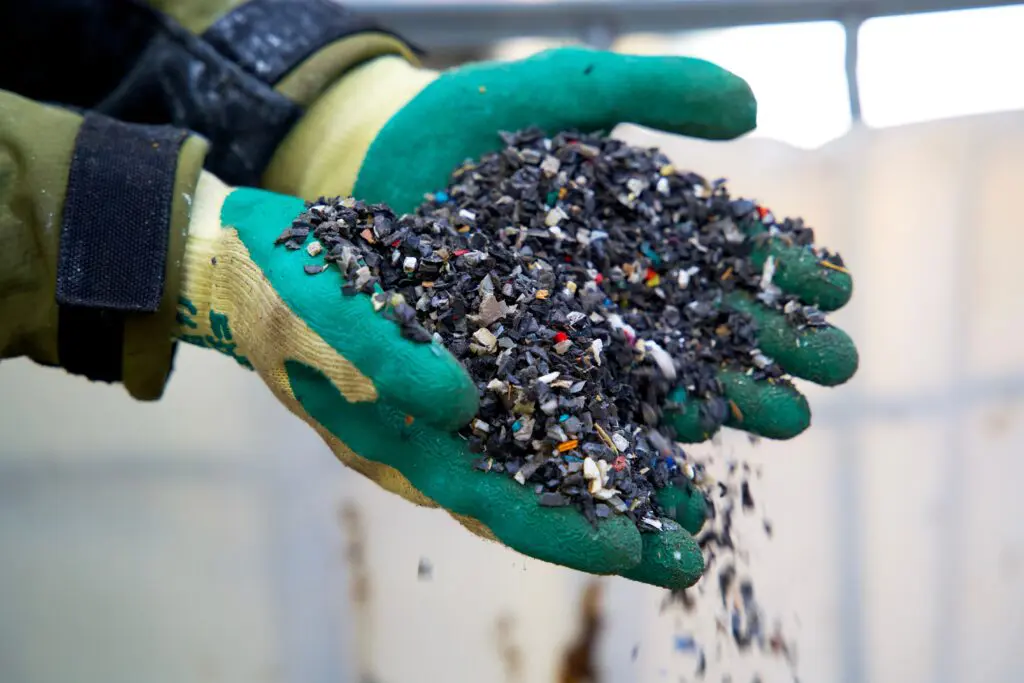
Scientists in the US have developed a low-cost nickel catalyst that breaks down mixed polyolefin waste without pre-sorting. The process targets the most widely used plastics, including polyethylene and polypropylene.
The catalyst converts solid plastics into oils and waxes that can be upcycled into fuels, lubricants and candles. Researchers at Northwestern University say the catalyst works at lower temperatures and pressures than existing systems, cutting energy demand and reducing overall processing costs.
The team notes that the catalyst also tolerates PVC contamination. This is significant because PVC often renders mixed waste ‘unrecyclable’ by damaging equipment and poisoning catalysts.
No weak spots
Polyolefins dominate global plastics consumption, representing two-thirds of the annual market. Production exceeds 220 million tonnes each year. Yet current recycling rates remain between 1% and 10%, due to the stubborn chemical structure of these polymers.
‘Polyolefins have incredibly strong carbon-carbon bonds,’ says co-author Yosi Kratish. ‘They contain no weak spots, so they resist breakdown in most systems.’
The new process uses hydrogenolysis to attack those stable bonds. The single-site design of the catalyst behaves like a ‘scalpel’ that targets branched polyolefins, even when mixed with unbranched grades. This effectively creates a built-in chemical sorting step.
‘We use ten times less catalyst loading, and our activity is ten times greater,’ Kratish adds. ‘We also run 100 degrees lower and at half the pressure.’
By-passing pre-sorting
The researchers report in Nature Chemistry that these improvements could remove the costly pre-sorting burden that undermines mixed-plastic recycling worldwide. Even small amounts of food residue or incompatible polymers often ruin entire batches.
‘Our catalyst could bypass that labour-intensive step and make polyolefin recycling more economically viable,’ says senior author Tobin Marks.
The method uses an abundant nickel compound rather than scarce noble metals, such as platinum and palladium, that are too limited to support global plastic recycling.
The researchers are now exploring scale-up pathways and potential industry partnerships.
Don't hesitate to contact us to share your input and ideas. Subscribe to the magazine or (free) newsletter.
 Loading ...


