
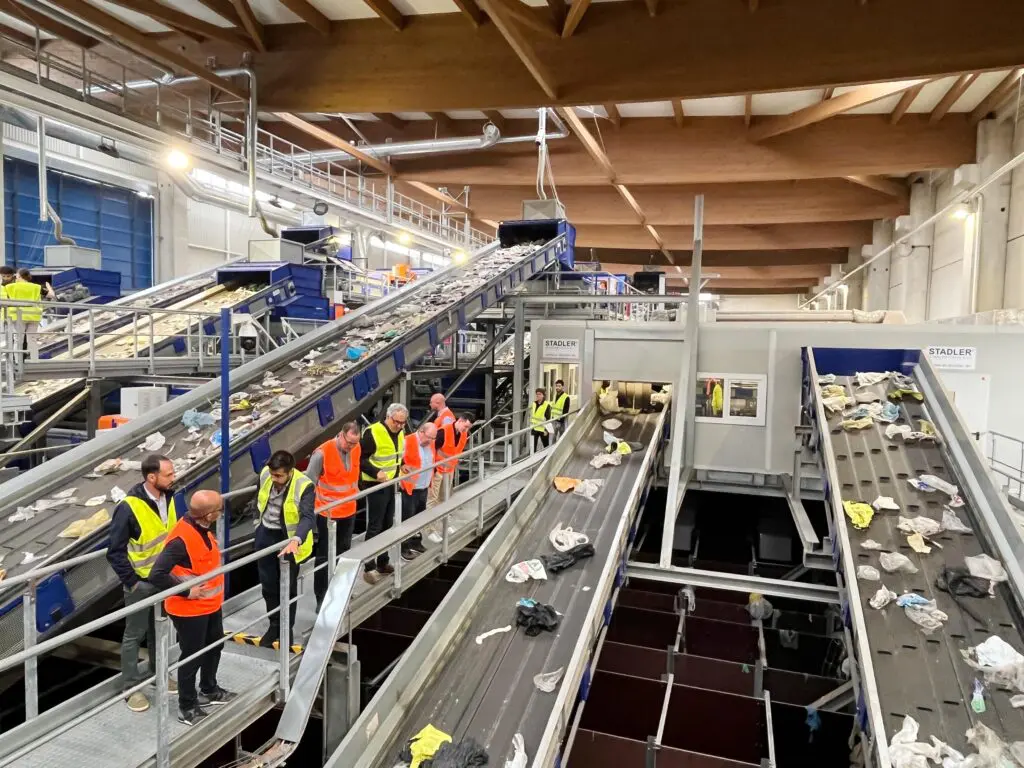
Struggling recyclers in Europe face weak demand, low prices and impending regulatory hurdles while low virgin prices are limiting Asian producers.
The plastic recycling industry in Europe is facing one of the most challenging periods in recent memory. Over the past year, a combination of economic pressures, regulatory uncertainty and weak demand has left recyclers struggling to stay afloat.
What was once seen as a promising circular economy sector is now under severe stress, with many recycling plants either running at reduced capacity or shutting down entirely.
Low demand, high costs
Across Europe, the economics no longer add up: high operating costs coupled with declining prices of prime plastics have eroded competitiveness. Virgin polymer prices have fallen sharply, pressured by new production capacities that have come online across the globe. Supply continues to expand faster than demand, driving prime material prices to multi-year lows.
The same pressure is evident in Asia, where recyclers are also running at low utilisation levels just to keep their plants operational. Low-priced virgin materials have sidelined recycled resins, leaving Asian buyers hesitant and reducing their import appetite for European plastic waste.
Regulatory bottlenecks
Beyond market forces, waste regulation has emerged as a major bottleneck for the recycling value chain. Malaysia is not yet clear about its system for the renewal of recycling licences, which is restricting the import of plastic scrap.
Vietnam continues to face delays and complications under its evolving import rules, while India remains constrained by the cumbersome notification process that requires synchronised approvals from both exporting and importing authorities, something that remains difficult in practice.
These regulatory hurdles have significantly reduced export flows out of Europe. With fewer export opportunities and limited domestic demand, scrap prices have fallen steeply. LDPE natural film scrap, which was trading around EUR 370 – 380 per tonne in September had dropped to EUR 315 – 320 by early November.
Coloured LDPE film has been as low as EUR 30 – 35 per tonne, barely covering baling costs. White and clean PP big bags, fetching up to EUR 130 per tonne in September were moving at EUR 70 – 75 per tonne just weeks later. Such price levels make the operations of waste management companies and collection centres economically unsustainable.
Crude oil prices, influenced by ongoing geopolitical tensions and sluggish global growth, have remained relatively low since September. A comparison of NYMEX crude prices between September and November shows a consistent softening trend which, in turn, has kept prime polymer prices depressed.
If crude oil and virgin polymer prices recover in 2026, recyclers could regain some competitiveness. However, for now, the imbalance between cheap virgin plastics and costly recycled materials continues to weigh heavily on margins and sentiment.
Notification game changer
Looking forward, the European recycling market faces a decisive turning point in 2026. From May, all exports of plastic waste from Europe will fall under a notification system, significantly tightening controls. This means that every shipment will require prior consent from both European and importing authorities, a process involving extensive paperwork, bank guarantees and documentation trails.
From November 2026 onward, exports to non-OECD countries will be prohibited.
Exporters will find it increasingly difficult and costly to move plastic scrap out of Europe. Authorities themselves will face a heavy administrative burden in processing notifications and liaising with foreign environmental bodies. Unless Europe rapidly scales up its own recycling and processing infrastructure, large volumes of plastic waste could accumulate domestically, creating further downward pressure on scrap prices and disrupting collection systems.
Capacity gap?
There are efforts in some European countries to introduce incentives for the use of recycled granules, or to levy taxes where minimum recycled content is not met, to stimulate demand for recycled polymers. However, until such measures are harmonised across all EU member states, their impact will remain limited. The period from May to November 2026 will be pivotal.
With all exports under notification and non-OECD exports ceasing thereafter, the key question is whether Europe and its OECD partners will have built sufficient capacity to absorb and process the plastic waste currently sent to non-OECD countries.
Don't hesitate to contact us to share your input and ideas. Subscribe to the magazine or (free) newsletter.
 Loading ...


